February is a good, quiet month to visit Morocco: days are mild and sunny and the first signs of spring appear in the south. Afternoons reach about 20 °C in Marrakech and the Sahara, but nights are still cold. In 2027, Ramadan is expected to begin around 8 February, which changes the rhythm of daily life without stopping your trip. Here is what to expect.
February weather in Morocco at a glance
| Place | Average high | Average low | Rainy days |
|---|---|---|---|
| Marrakech | 20 °C | 6 °C | 6 |
| Fes | 18 °C | 6 °C | 8 |
| Chefchaouen (Rif) | 15 °C | 6 °C | 9 |
| Ouarzazate (south of the Atlas) | 18 °C | 4 °C | 3 |
| Merzouga (Sahara) | 20 °C | 6 °C | 1 |
Averages of 20 years of daily weather data (2006–2025, Open-Meteo ERA5), rounded. Rainy days are days with at least 1 mm of rain. Individual years can be warmer, colder or wetter.
The weather in February, region by region
Marrakech
Expect afternoons around 20 °C and nights around 6 °C, with rain on about six days. It is a pleasant month for walking in the medina and the gardens, and hotel prices are lower than in spring.
Fes, Meknes and Chefchaouen
Fes averages about 18 °C by day and 6 °C at night, with rain on around eight days. Chefchaouen is still wet and cool (about 15 °C), so plan a flexible day there and pack a waterproof layer.
The Atlas Mountains
Snow is still common on the high peaks and can briefly close mountain passes. In the Anti-Atlas near Tafraoute, almond trees usually start to flower in February, covering the valleys in pink and white blossom.
Merzouga and the Sahara
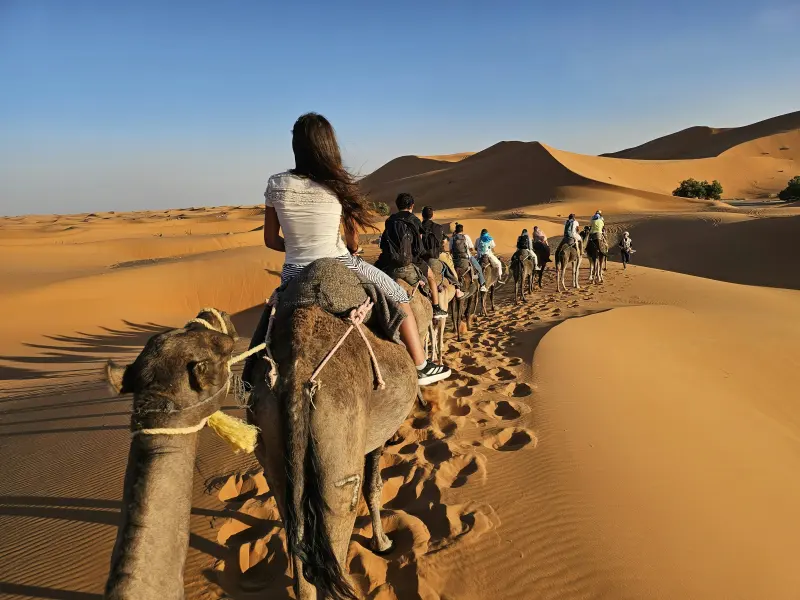
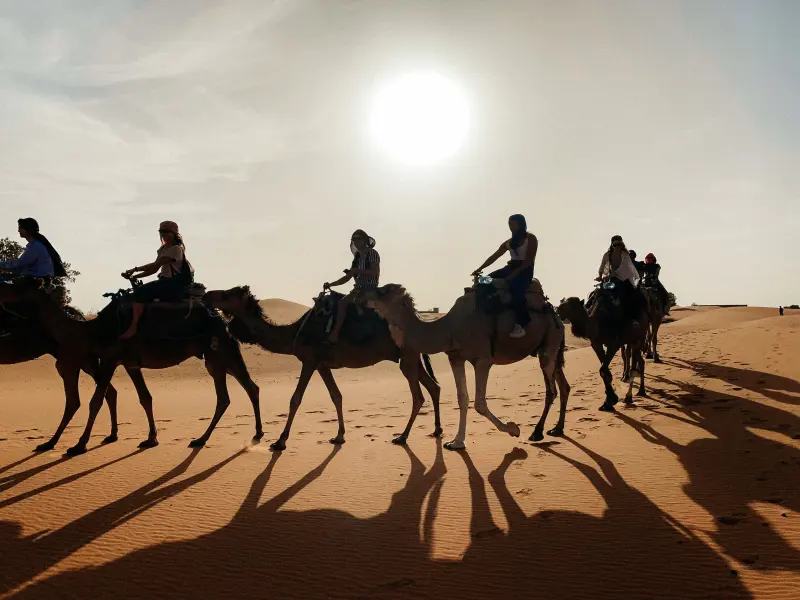
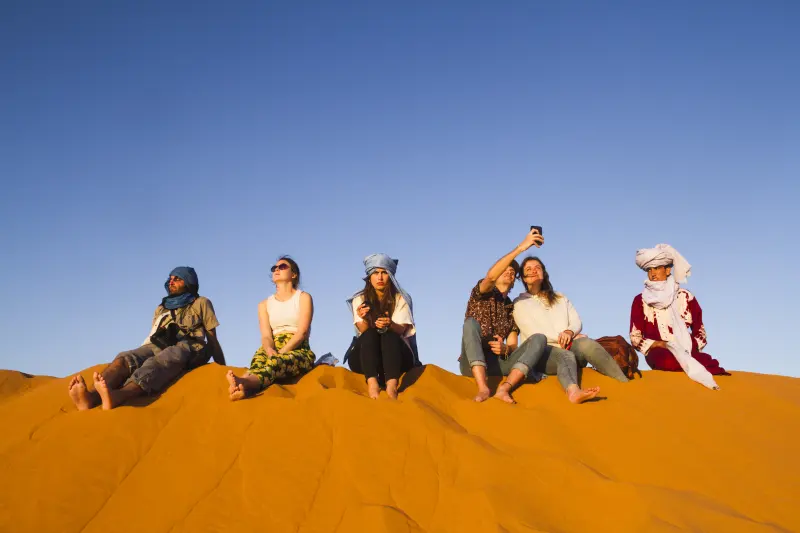
February is one of the most comfortable months in the dunes: sunny afternoons around 20 °C and almost no rain. Nights average about 6 °C and feel colder in camp, so warm clothes for the evening are still essential.
What to pack for Morocco in February
- A warm jacket and a hat for evenings and desert nights
- Layers for big temperature changes between day and night
- A light waterproof for the north
- Comfortable walking shoes
- Sunscreen and sunglasses
- Modest clothing that covers shoulders and knees, especially during Ramadan
Our travel tips for February
- Check the Ramadan dates. Ramadan 2027 is expected to start around 8 February (the exact date depends on the moon). Sights stay open and tours run normally, but many cafés close during the day outside tourist areas and opening hours can be shorter.
- Be discreet during the fast. Avoid eating, drinking or smoking openly in the street during daylight hours, especially in small towns. Hotels, riads and tourist restaurants serve food as usual.
- Join an iftar. The evening meal that breaks the fast is a highlight of Ramadan. Streets come alive after sunset, and sharing harira, dates and msemen with a local family is unforgettable.
- Watch the clocks. Morocco usually switches its clocks back by one hour during Ramadan. Check the time on your phone the day it changes so you do not miss a transfer.
- Travel light on crowds. February is low season, so it is a good month to book a private tour or a luxury desert camp at short notice.
Holidays and events in February
The Almond Blossom Festival in the Tafraoute area usually takes place in February, timed to the flowering, which depends on winter rain. Ramadan 2027 is expected to begin around 8 February and last until early March; Morocco confirms the date by moon sighting.
A suggested route for February
For sunshine and the desert, the 3-day Marrakech to Merzouga tour is ideal in February. If you want almond blossom and the coast, look at our 5-day Agadir, Marrakech and Essaouira tour.
Morocco month by month
January · February · March · April · May · June · July · August · September · October · November · December
Planning your dates? Tell us when you are travelling and our team in Merzouga will suggest the best route for the season.